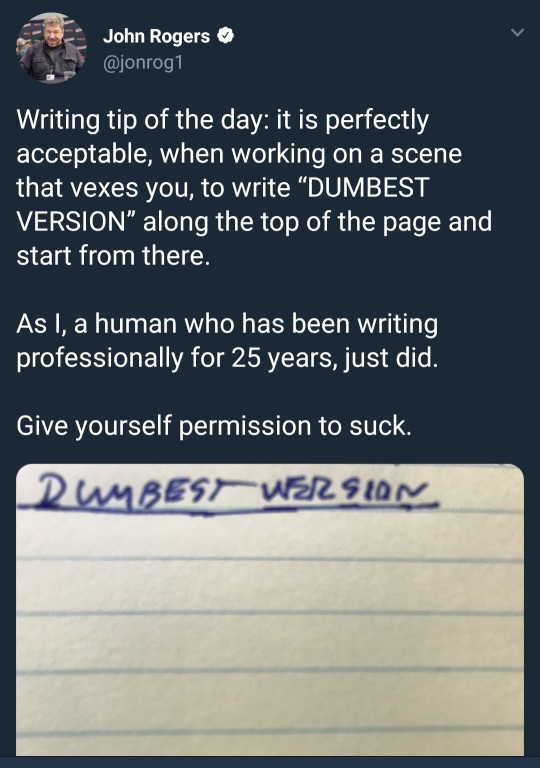
File this under “super obvious yet I always seem to forget it.”
I don’t write romance (I totally respect people who do, though!) but this is also great writing advice in general! What is preventing the protagonist from achieving their goal?
Why can’t these two people be together now?
Why can’t the mystery be solved now?
Why can’t they overthrow the evil overlord now?
If you don’t have a solid answer for these questions, that’s a good indicator that the plot could use some more work.
Also test your answer a little bit. If it’s as thin as they’re just refusing to sit down and have a simple conversation, you might want to re-think how things are going.
As a beta reader/editor, I tend to ask this question a lot: “Why are they doing it this way when there’s a much easier path available?” That’s not to say that they should take the easier path, because that would usually be boring. Instead, the point is that the question needs an answer–either eliminate the easier path or give them a very clear reason for not taking it. (And if I’m asking the question, that reason isn’t as clear as you think it might be.)
I find it very difficult to root for characters who have a sensible option available and just don’t take it. If the only reason is “Because there wouldn’t be a story otherwise,” you haven’t actually found the story yet.
more on writing muslim characters from a hijabi muslim girl
– hijabis get really excited over pretty scarves – they also like to collect pins and brooches – we get asked a lot of questions and it can be annoying or it can be amusing, just depends on our mood and personality and how the question is phrased – common questions include: – “not even water?” (referring to fasting) – hijabis hear a lot of “do you sleep in that?” (we don’t) and “where is your hair?” (in a bun or a braid, usually) – “is it mooze-slim or mozzlem?” (the answer is neither, it’s muslim, with a soft s and accent on the first syllable) – “ee-slam or iz-lamb?” (it’s iss-laam, accent on the first syllable) – “hee-job?” (heh-jahb, accent on the second syllable)
– “kor-an?” (no. quran. say it like koor-annn, accent on the second syllable) – people tend to mess up our names really badly and you just get a sigh and a resigned nod or an awkward smile, maybe a nickname instead – long hair is easy to hide, short hair is harder to wrap up – hijab isn’t just covering hair, it’s also showing as little skin as possible with the exception of face, hands, and feet, and not wearing tight/sheer clothing – that applies to men too, people just don’t like to mention it ( i wonder why) – henna/mehendi isn’t just for special occasions, you’ll see people wearing it for fun – henna/mehendi isn’t just for muslims, either, it’s not a religious thing – henna/mehendi is not just for women, men also wear it, especially on their weddings – there are big mehendi parties in the couple of nights before eid where people (usually just women and kids) gather and do each other’s mehendi, usually just hands and feet – five daily prayers – most muslim kids can stutter through a couple verses of quran in the original arabic text by the age of seven or eight, it does not matter where they live or where they’re from or what language they speak natively – muslim families tend to have multiple copies of the quran – there are no “versions” of the quran, there has only ever been one. all muslims follow the exact same book – muslims have no concept of taking God’s name in vain, we call on God at every little inconvenience – don’t use islamic phrases if you don’t know what they mean or how to use them. we use them often, inside and outside of religious settings. in islam, it is encouraged to mention God often and we say these things very casually, but we take them very seriously – Allahu Akbar means “God is Greatest” (often said when something shocks or surprises us, or if we’re scared or daunted, or when something amazing happens, whether it be good or bad; it’s like saying “oh my god”) – Subhan Allah means “Glory be to God” (i say subhan Allah at the sky, at babies, at trees, whatever strikes me as pleasant, especially if it’s in nature) – Bismillah means “in the name of God” and it’s just something you say before you start something like eating or doing your homework – In Shaa Allah means “if God wills” (example: you’ll be famous, in shaa Allah) (it’s a reminder that the future is in God’s hands, so be humble and be hopeful)
– Astaghfirullah means “i seek forgiveness from Allah” and it’s like “god forgive me” – Alhamdulillah means “all thanks and praise belong to God” and it’s just a little bit more serious than saying “thank god” (example: i passed my exams, alhamdulillah; i made it home okay, alhamdulillah) – when i say we use them casually, i really mean it – teacher forgot to assign homework? Alhamdulillah – our version of “amen” is “ameen” – muslims greet each other with “assalamu alaikum” which just means “peace be on you” and it’s like saying hi – the proper response is “walaikum assalam” which means “and on you be peace” and it’s like saying “you too”
As a Muslim this post is so very important and it makes me so happy that it gives the small facts and details that one might be unaware of or confused about.
The year is 2042. Your daughter is awkwardly silent as she eats her dinner. “Something wrong sweetie?” She sighs and puts down her fork. “I was digging really deep in AO3 last night…Why didn’t you finish that coffee shop au?” It happened. Your past has come back to haunt you. Nay, it never truly left.
U CANNOT OUTRUN UR CRIME
OKAY BUT WAIT. This has happened to me. Recently. Because I am old and I have things out there from previous fandoms with previous pseuds and one day my teenager begins a rant at me about people never finishing any WIPs on the pit of voles (which he does not call the pit of voles because he has No Knowledge of such a thing but yet he still reads on which I didn’t think anyone did any longer) and he points out an example to me of something I WROTE AND LEFT WIPing for ages and he has NO IDEA #1 that his mom wrote this and #2 How much it still haunts me to this day that it will. sit. there. for. eternity. because I am too lazy to pull it down.
Do an
outline, whatever way works best.
Get yourself out of the word soup and know where the story is headed.
Conflicts
and obstacles. Hurt the protagonist, put things in their way, this keeps
the story interesting. An easy journey makes the story boring and boring is
hard to write.
Change
the POV. Sometimes all it takes to untangle a knotted story is to look at
it through different eyes, be it through the sidekick, the antagonist, a minor
character, whatever.
Know the
characters. You can’t write a story if the characters are strangers to you.
Know their likes, dislikes, fears, and most importantly, their motivation. This makes the path clearer.
Fill in
holes. Writing doesn’t have to be linear; you can always go back and fill in plotholes,
and add content and context.
Have
flashbacks, hallucinations, dream sequences or foreshadowing events. These
stir the story up, deviations from the expected course add a feeling of urgency
and uncertainty to the narrative.
Introduce
a new mystery. If there’s something that just doesn’t add up, a big question mark, the story becomes more
compelling. Beware: this can also cause you to sink further into the mire.
Take
something from your protagonist. A weapon, asset, ally or loved one. Force
him to operate without it, it can reinvigorate a stale story.
Twists
and betrayal. Maybe someone isn’t who they say they are or the protagonist
is betrayed by someone he thought he could trust. This can shake the story up
and get it rolling again.
Secrets. If
someone has a deep, dark secret that they’re forced to lie about, it’s a good
way to stir up some fresh conflict. New lies to cover up the old ones, the
secret being revealed, and all the resulting chaos.
Kill
someone. Make a character death that is productive to the plot, but not “just because”. If done well, it affects
all the characters, stirs up the story and gets it moving.
Ill-advised
character actions. Tension is created when a character we love does
something we hate. Identify the thing the readers don’t want to happen, then
engineer it so it happens worse than they imagined.
Create cliff-hangers. Keep the readers’ attention by putting the characters into new problems and
make them wait for you to write your way out of it. This challenge can really
bring out your creativity.
Raise the
stakes. Make the consequences of failure worse, make the journey harder.
Suddenly the protagonist’s goal is more than he expected, or he has to make an
important choice.
Make the
hero active. You can’t always wait for external influences on the
characters, sometimes you have to make the hero take actions himself. Not
necessarily to be successful, but active
and complicit in the narrative.
Different
threat levels. Make the conflicts on a physical level (“I’m about to be
killed by a demon”), an emotional level (“But that demon was my true love”) and
a philosophical level (“If I’m forced to kill my true love before they kill me,
how can love ever succeed in the face of evil?”).
Figure
out an ending. If you know where the story is going to end, it helps get
the ball rolling towards that end, even if it’s not the same ending that you
actually end up writing.
What if?
What if the hero kills the antagonist now, gets captured, or goes insane? When
you write down different questions like these, the answer to how to continue the
story will present itself.
Start
fresh or skip ahead. Delete the last five thousand words and try again. It’s
terrifying at first, but frees you up for a fresh start to find a proper path. Or
you can skip the part that’s putting you on edge – forget about that fidgety
crap, you can do it later – and write the next scene. Whatever was in-between
will come with time.
since my username change the old post with this link doesn’t work so here’s a new one–my hope for more good femslash smut in the world! over 3k of general advice, do’s and don’ts, and some great examples.
(if you have trouble with this on mobile, try “links for mobile” in my description and then the link there)
Sticking a landing will royally fuck up your joints and possibly shatter your ankles, depending on how high you’re jumping/falling from. There’s a very good reason free-runners dive and roll.
Hand-to-hand fights usually only last a matter of seconds, sometimes a few minutes. It’s exhausting work and unless you have a lot of training and history with hand-to-hand combat, you’re going to tire out really fast.
Arrows are very effective and you can’t just yank them out without doing a lot of damage. Most of the time the head of the arrow will break off inside the body if you try pulling it out, and arrows are built to pierce deep. An arrow wound demands medical attention.
Throwing your opponent across the room is really not all that smart. You’re giving them the chance to get up and run away. Unless you’re trying to put distance between you so you can shoot them or something, don’t throw them.
Everyone has something called a “flinch response” when they fight. This is pretty much the brain’s way of telling you “get the fuck out of here or we’re gonna die.” Experienced fighters have trained to suppress this. Think about how long your character has been fighting. A character in a fist fight for the first time is going to take a few hits before their survival instinct kicks in and they start hitting back. A character in a fist fight for the eighth time that week is going to respond a little differently.
ADRENALINE WORKS AGAINST YOU WHEN YOU FIGHT. THIS IS IMPORTANT. A lot of times people think that adrenaline will kick in and give you some badass fighting skills, but it’s actually the opposite. Adrenaline is what tires you out in a battle and it also affects the fighter’s efficacy – meaning it makes them shaky and inaccurate, and overall they lose about 60% of their fighting skill because their brain is focusing on not dying. Adrenaline keeps you alive, it doesn’t give you the skill to pull off a perfect roundhouse kick to the opponent’s face.
Swords WILL bend or break if you hit something hard enough. They also dull easily and take a lot of maintenance. In reality, someone who fights with a sword would have to have to repair or replace it constantly.
Fights get messy. There’s blood and sweat everywhere, and that will make it hard to hold your weapon or get a good grip on someone.
A serious battle also smells horrible. There’s lots of sweat, but also the smell of urine and feces. After someone dies, their bowels and bladder empty. There might also be some questionable things on the ground which can be very psychologically traumatizing. Remember to think about all of the character’s senses when they’re in a fight. Everything WILL affect them in some way.
If your sword is sharpened down to a fine edge, the rest of the blade can’t go through the cut you make. You’ll just end up putting a tiny, shallow scratch in the surface of whatever you strike, and you could probably break your sword.
ARCHERS ARE STRONG TOO. Have you ever drawn a bow? It takes a lot of strength, especially when you’re shooting a bow with a higher draw weight. Draw weight basically means “the amount of force you have to use to pull this sucker back enough to fire it.” To give you an idea of how that works, here’s a helpful link to tell you about finding bow sizes and draw weights for your characters. (CLICK ME)
If an archer has to use a bow they’re not used to, it will probably throw them off a little until they’ve done a few practice shots with it and figured out its draw weight and stability.
People bleed. If they get punched in the face, they’ll probably get a bloody nose. If they get stabbed or cut somehow, they’ll bleed accordingly. And if they’ve been fighting for a while, they’ve got a LOT of blood rushing around to provide them with oxygen. They’re going to bleed a lot.
Here’s a link to a chart to show you how much blood a person can lose without dying. (CLICK ME)
If you want a more in-depth medical chart, try this one. (CLICK ME)
Hopefully this helps someone out there. If you reblog, feel free to add more tips for writers or correct anything I’ve gotten wrong here.
How to apply Writing techniques for action scenes:
– Short sentences. Choppy. One action, then another. When there’s a lull in the fight, take a moment, using longer phrases to analyze the situation–then dive back in. Snap, snap, snap. – Same thing with words – short, simple, and strong in the thick of battle. Save the longer syllables for elsewhere. – Characters do not dwell on things when they are in the heat of the moment. They will get punched in the face. Focus on actions, not thoughts. – Go back and cut out as many adverbs as possible. – No seriously, if there’s ever a time to use the strongest verbs in your vocabulary – Bellow, thrash, heave, shriek, snarl, splinter, bolt, hurtle, crumble, shatter, charge, raze – it’s now. – Don’t forget your other senses. People might not even be sure what they saw during a fight, but they always know how they felt. – Taste: Dry mouth, salt from sweat, copper tang from blood, etc – Smell: OP nailed it – Touch: Headache, sore muscles, tense muscles, exhaustion, blood pounding. Bruised knuckles/bowstring fingers. Injuries that ache and pulse, sting and flare white hot with pain. – Pain will stay with a character. Even if it’s minor. – Sound and sight might blur or sharpen depending on the character and their experience/exhaustion. Colors and quick movements will catch the eye. Loud sounds or noises from behind may serve as a fighter’s only alert before an attack. – If something unexpected happens, shifting the character’s whole attention to that thing will shift the Audience’s attention, too. – Aftermath. This is where the details resurface, the characters pick up things they cast aside during the fight, both literally and metaphorically. Fights are chaotic, fast paced, and self-centered. Characters know only their self, their goals, what’s in their way, and the quickest way around those threats. The aftermath is when people can regain their emotions, their relationships, their rationality/introspection, and anything else they couldn’t afford to think or feel while their lives were on the line.
Do everything you can to keep the fight here and now. Maximize the physical, minimize the theoretical. Keep things immediate – no theories or what ifs.
If writing a strategist, who needs to think ahead, try this: keep strategy to before-and-after fights. Lay out plans in calm periods, try to guess what enemies are thinking or what they will do. During combat, however, the character should think about his options, enemies, and terrain in immediate terms; that is, in shapes and direction. (Large enemy rushing me; dive left, circle around / Scaffolding on fire, pool below me / two foes helping each other, separate them.)
Lastly, after writing, read it aloud. Anyplace your tongue catches up on a fast moving scene, edit. Smooth action scenes rarely come on the first try.
 Molly's Monsters